Session Recap: Customer Insights: Key Takeaways from Natalie Higgin
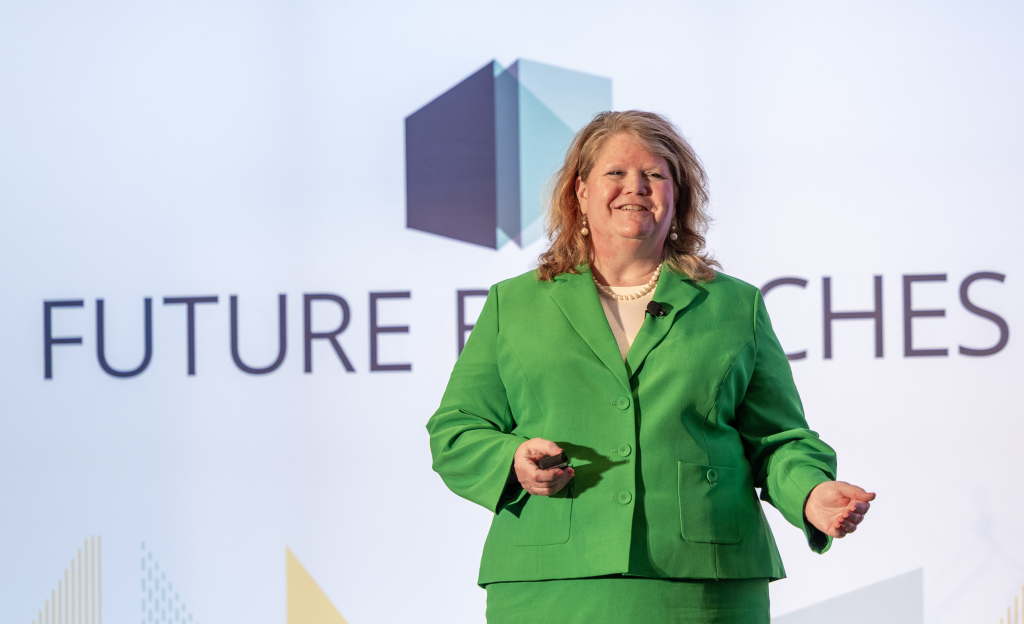
In the keynote session "What Do Your Customers Truly Want? Striving for True Customer Insights" at Future Branches Boston 2025, Natalie Higgins, SVP, Director of Self-Service Strategy, Digital Banking & Customer Experience at Citizens Bank, explored how deep customer understanding fuels digital transformation. Hosted by EJ Kritz of DBSI on Day 1, Track A, the talk highlighted Citizens Bank's journey to make digital a channel of choice without replacing branches or contact centers. For banking leaders, these insights are vital amid rising expectations for convenient, personalized omnichannel experiences.
Key Takeaways
1. Voice of the Customer Drives Actionable Insights
Citizens Bank used surveys, branch exit interviews, and post-interaction polls to uncover barriers like security fears, branch preferences, and low confidence in digital tools. Customers often overlooked digital options for simple tasks, revealing awareness gaps. This qualitative and quantitative approach informed strategies to build trust and highlight digital capabilities, aligning with industry shifts toward proactive customer listening for higher adoption rates.
2. Demographic Analysis Reveals Usage Patterns
Analyzing tenure, account activity, age, affluence, and geography showed mature customers and low-activity accounts lag in digital use. Many blend channels but prefer branches for relationships. This data helped prioritize activation efforts, reflecting broader trends where banks target underserved segments to boost primary relationships and digital engagement.
3. Behavior Segmentation Enables Targeted Engagement
Cohort analysis segmented users into sustained, periodic, dormant, and non-enrolled groups, challenging assumptions that one-time activation ensures loyalty. Insights showed periodic drop-offs, prompting refined campaigns. This mirrors fintech-driven personalization trends, helping banks sustain digital habits across customer lifecycles.
4. Personalized Campaigns Boost Adoption
Evolving from two to three email variants, campaigns now tailor messages: alerts for sustained users, logins for periodic ones, and app rediscovery for dormant. Extended to social and in-branch messaging, these multimedia efforts keep digital top-of-mind, offering practical scalability for banks aiming to shift transactions from assisted channels.
5. Digital Demos and Indicators Empower Colleagues
A catalog of screen-by-screen mobile app demos equips bankers for side-by-side guidance, with email follow-ups and online access for reinforcement. Red-yellow-green indicators on customer profiles enable personalized recommendations during interactions, enhancing training and tying into omnichannel strategies prevalent in modern banking.
Understanding your customer is an important element to ensure that you chart a path to excellence, to destination excellence, and you have a vision of where you want to go.
— Natalie Higgins, SVP, Director Self-Service Strategy, Digital Banking & Customer Experience, Citizens Bank
Why It Matters
Natalie Higgins' strategies address core challenges in retail banking: not all customers embrace digital despite its convenience, with barriers like security concerns and channel preferences persisting. By combining insights with personalized tools, Citizens is shifting simple transactions online, freeing branches for complex needs. This customer-first model supports industry goals of omnichannel excellence amid fintech competition and evolving behaviors, enabling banks to measure progress toward universal digital utilization while strengthening relationships.
Actionable Insights
- Conduct multi-method VoC research: Use surveys, interviews, and polls to identify specific adoption barriers.
- Segment by behavior and demographics: Tailor outreach to sustained, periodic, and dormant users for higher retention.
- Deploy colleague tools like demos: Provide step-by-step guides and status indicators for personalized guidance.
- Launch multimedia campaigns: Customize emails, social, and in-branch messages to sustain digital engagement.
Want more insights from Future Branches Boston 2025? Explore the full agenda.
Click to View Full Session Transcript ▼
[2025], [Future Branches Boston]. [Keynote] – [Day 1, Track A - What Do Your Customers Truly Want? Striving for True Customer Insights]
EJ Kritz, Chief Experience Officer, DBSI: All right, everybody. Welcome back. We got a few folks rolling into the room. We've got a a great keynote speaker here on deck that I'm personally really excited to hear our previous panel talked a lot about insights and leveraging what we hear from. Customers and members to make that truly actionable.
Citizens Bank is an institution I have had the utmost respect for quite a long time. It's actually, I think by way of acquisition, probably the first bank that I ever had. Natalie Higgins is the director of self-service strategy, digital and omnichannel banking at Citizens. Has an awful lot of incredible things to share on a digital first customer, but leveraging insights to achieve that.
So please join me in welcoming Natalie Higgins.Natalie Higgins, SVP, Director Self-Service Strategy, Digital Banking & Customer Experience, Citizens Bank: Good morning and thank you for your time today. I'm Natalie Higgins and very excited to be here to share some of our digital transformation insights for our digital first culture. And with that, I wanted to share a little bit about citizens. Before we start. As you may know, citizens is a traditional bank and we have offerings.
Diversified across our retail and commercial businesses. And with that our mission is to help our customers. Colleagues and share not shareholders communities to reach their potential. Our retail network spans the Midwest to the Northeast, and we have a more limited network in the Mid-Atlantic and in Florida.
And more recently we've opened several offices across the country to support our growing private bank. We received several recognitions and most recently we were recognized as one of the best regional banks for the Mid-Atlantic and New England. And last year, fortune named us one of the world's most admired companies for their magazine.
And that was the second year in a row. And all of these recognitions are so appreciated and reflect the company that we strive to be every day. So thinking about change, driving change across your organization, regardless what it is, what facet is an exciting proposition. And understanding your customer is an important element to ensure that you chart a path to excellence, to destination excellence, and you have a vision of where you want to go.
So that regardless whether you're delivering an experience, a new product, or even a service, understanding the who that you're delivering for is an important element to ensure you deliver a great outcome. As you move to the delivery and realize that the program is released, the success measures and milestones that you have, validate that you've delivered on that vision, that goal that you set out to do, and the delivery for your customer is what brings that destination to life and makes it a realistic outcome.
A.
For citizens, our digital transformation has been very exciting and we've released many features, new functionality to drive to where digital is truly a channel of choice for our customers. They have many choices today and we're not trying to replace our assisted channels in the branches and contact center, but we want the customer to have the power and the convenience.
Digital so that they can manage their accounts and enhance their relationship with that. All of our transformation has been driven by looking at the customer. Where are they transacting? What are they using? And so that we could prioritize and deliver on those digital evolutions for the customer. And as we've started to look at our milestones and our destination excellence of wanting every customer to use digital, we're not there.
Not every customer is using it. And so we've been revisiting our insights. To understand, to see where we can drive more change and thinking about our progress. Digital utilization is growing. We have more transactions that are occurring digitally, more users than ever before, and we are seeing this simple day-to-day transactions go away from the branch and away from the contact center, so the customers are taking advantage of it.
But looking at the customer base, there are some who haven't taken that step. Most are using it, but not everybody, and we know there's value there for them. So thinking about insight strategies, I wanted to share some of the things that we've done over time to bring the customer needs to life and also inform our strategies for digital adoption.
And those range from the voice of the customer thinking about listening to our customers. We've also looked at demographics and our customers and how they're using and who they are. From a customer perspective, account utilization is important. And the last thing is digital behavior segmentation.
So for those that are using or not using digital, to what extent is that doing. So these strategies, I wanted to share some of those, and then at the end we'll share how we're applying those to our campaigns and strategies to drive adoption. So thinking about voice of the customer, which is the very, impetus of finding out what customer needs are.
Surveys are a very direct and obvious way to get feedback, and we did that in the beginning. We partnered with our customer experience team and did a very. Broad review of customer needs, especially for those who weren't using digital, to find out what their barriers to adoption are, and we've continued to do that over time.
We also complimented the surveys with interviews and talked to customers as they were leaving branches. We've talked to them while they're on the phone with the contact center to compliment and really bring that light to life with more qualitative information. And then lastly, through some of our standing surveys, after a contact center interaction or branch interaction, we've also asked customers, did you think about digital before you took the step for that assisted transaction?
And in some cases, customers, it wasn't intuitive. They weren't thinking about digital as a solution. And so that brought to light that we knew we needed to bring more attention and awareness to the availability and the scope of what the digital channel offers. Through all of these opportunities, we were able to see some feedback themes, and they came through very strongly.
There were customers concerned about safety and security that had a general mistrust, not for citizens, but for digital overall, and they were afraid to use digital for their banking. Another area was around preference. Some customers wanted to use the branch and wanted to have that personal relationship, and that was driving their decision.
And then lastly, some customers stressed for and confident they may be using digital, but to use it for their financial relationship. They weren't confident to take that step. So we knew we needed to use that to help them and support them through making that choice. So all of these things have helped us transition and expand our programs.
So thinking about the next. Phase around demographic analysis. We started to look at customers and their attributes, and we looked at everything from how long have they been customers, how many accounts do they have, what are they doing with their accounts and geography. We looked at age many things.
Affluence age was an area where we did see some. Disparate differences. And it seemed fairly obvious as customers were more mature in their relationship they weren't as active. But over time, that's continued to be an area that we know we need to focus. And help our customers account activity for those who aren't using their account.
To think about them becoming digital was a bigger step, and we're looking to activate them to make sure that they are using citizens and that is their primary bank because that influences their usage of digital as well, and channel activity, thinking about where they're transacting. For those that are calling the contact center or going to the branch, how are they digital and are they using it?
And many customers are using multiple channels to do their banking and they want to, but some, again, back to the preference, are specific to certain channels. From there, we started to dig into behavior segments and looking at how often customers were either using digital or not using digital, and really starting to separate that for those who were sustained.
We started not just for sustain, but we started to do cohort analysis to see over time. Which customers were using digital all the time versus those who are using it more periodically coming in and out of activity. And then there were some who were dormant. They may have tried digital and then stopped.
And then there are a few who haven't taken the step to enroll. And so having that view really helped us appreciate. But not everybody that becomes active is gonna stay active. And we had been operating from that perspective for quite some time thinking we get 'em active and we'll keep them there.
So taking all these insights and we're continuing to collect them over time, expanding on them. Having insights in and of itself isn't enough, so taking those and driving action is really where we've started to see some additional change in the inactive groups, we have convenience campaigns, we have digital first interactions with our assisted channel, bankers and contact center, and then we also have customer outreach that's occurring where our colleagues are having these conversations.
And that's on the phone or in person. So a variety of ways. And so I have some examples to show in how we've used the information. So convenience campaigns are typically multimedia and thinking about emails, going back to when we started, we had two versions. An active version and an active seemed pretty basic.
We assumed everybody that was active was using it all the time, and we were promoting the new features and functionality. And then for those who weren't active, we had an add added information about the value of digital and encouraging to download the mobile app and to register as well as the new features, functionality.
And as we built the information, especially around the behavior segments, we knew that two versions isn't enough. So you can see in our latest campaign, we've had three different versions all focused on. Keeping those who are sustained active in that sustained activity with information about registering for alerts and some of the new real-time capabilities that we have.For those who are periodically active, we are encouraging them to stay connected and to log back in. And for those who are dormant, and this population are the ones who. We know they tried it and we want them to come back. We're encouraging them to rediscover the app so that they can continue to be a part of our digital community.
So having these campaigns and these messages aren't just email and we've taken the themes and put them into social media and into our digital messaging that is in the branch as well. So very powerful to keep that message alive and keep digital at the forefront of the customers mind. So switching gears and thinking about the assistant interactions, we knew there was awareness opportunity as well as the lagging confidence.
And so we built a set of a catalog of digital demos for colleagues to share with customers that they could use while they're with us. A customer side by side or on the phone, and that gives them a screen by screen, step-by-step view to showcase how things work in the mobile app. And that's been very powerful to not only complement the conversation that they're having with the customer to show them, but also give them the ability.
To email that catalog to the customer and or the specific demo so that after the conversation, the customer can go back to it and sustain their information and their knowledge so they're not afraid the next time. The demos are also available on our.com site so that customers can use them when they need to.
And then thinking about colleagues, it's been a great training tool. Especially for new colleagues and to keep people refreshed on the changes that we're making so that the colleagues have the ability to review them, stay strong in their knowledge so that they can be strong for our customer. And with that, the demos have really proved to be a powerful tool before, during, and after our interactions.
And lastly, thinking about customer interactions, where we started is we were encouraging colleagues to recommend digital to every co customer, especially when they were assisting them with something that was digital in nature and available in digital. And. Before we had digital indicators as a part of the relationship profile, it was a one size fits all approach, recommend digital, but they had no idea without further investigation the status of the customer.
Had they tried things, were they using digital? So now we have these indicators where at a glance, a colleague can see. Red, yellow, green for different statuses that the customer is either active, they may have been active. In a periodic way recently, or Redwood indicate that they haven't used it at all, and so that gives them the opportunity to personalize their recommendations, their messaging to help customers and use that in.
Both their outreach 'cause they can be recommending digital as a part of some of those conversations as well as when they're in person and it's on the screen right in front of them. So those have really made a difference for the customers and bringing to life their digital interactions. Each of these and all these insights, again, have been a compliment to our programs and helped us be stronger and more refined in our personalization to drive change and thinking about our destination excellence.
We are continuing to pursue and know that we will someday have every customer using digital to compliment their relationship. And I hope today that these insights have helped you and will spark some creative opportunities in your organization. And lastly, I'd like to leave you with a quote from Ben Grossman, stand apart by offering high quality, relevant experiences to audiences that you truly understand.
And with that, I thank you for your time today.
EJ Kritz, Chief Experience Officer, DBSI: How about one more round of applause, please, everybody for Natalie. Wonderful. Thank you so much. Appreciate it.